
SEO results need to be viewed within the entire customer acquisition funnel — if you want to first define your investment boundaries, you can use Go-Global Quote Calculator Get a budget estimate, or go to Overseas Growth Knowledge Base Go through the checklist item by item.
1. Why the “keyword” unit is no longer enough
Traditional keyword research followed a simple formula: “find keywords → check volume → chase rankings.” The problem? A single keyword has one search volume, but it can carry four completely different intents. For example solar inverter: navigational intent (looking for a brand’s official site), informational intent (trying to understand how something works), commercial investigation (comparing brands), and transactional intent (ready to buy). From a “keyword” perspective, they’re all the same term. From an “intent” perspective, they’re four entirely different businesses.
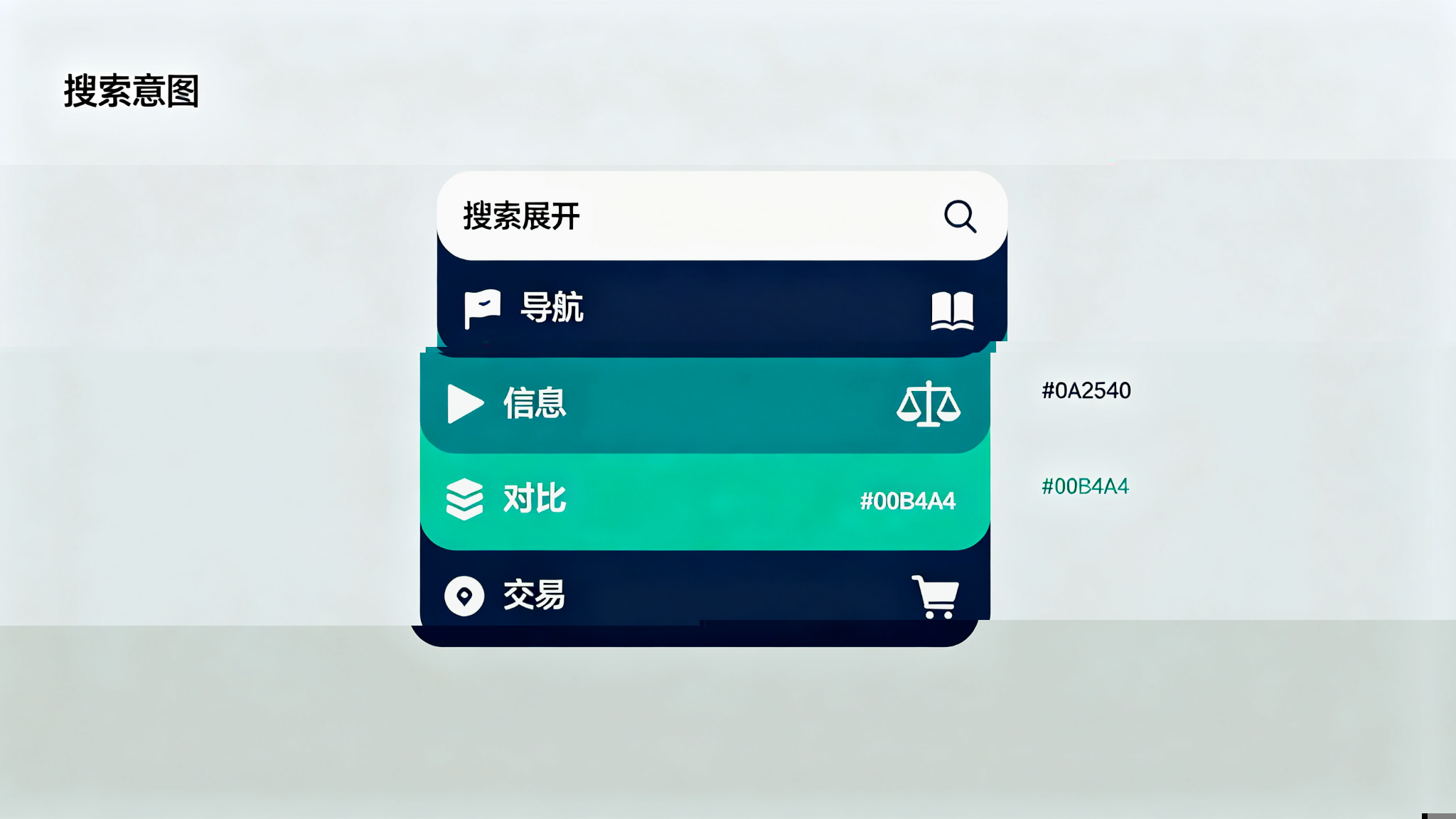
II. The Four-Layer Model of B2B Search Intent
| Intent layer | Searcher state | Typical keywords | Content that should be included | Page objectives |
|---|---|---|---|---|
| Navigation | have your trust | Brand keywords | Official website, brand information | Direct access and trust |
| Information | Learning and understanding | how/what/why | Guides, educational content, FAQs | Retention and authority |
| Business Research | Compare candidates | best/vs/review | Comparison pages, case studies, spec sheets | Shortlisted |
| Purchasing transactions | Ready to place an order | price/wholesale/OEM | Product pages, quotes, contact | Inquiries and conversions |
All four layers must be covered, but Completely different priorities: B2B procurement cycles are long, and the commercial research stage has the biggest impact on decisions — it determines whether you make the “shortlist.”
Part 3: From “Finding Keywords” to “Matching Content”
- Layer existing keywords by intent: Categorize the keywords in your list into four tiers — don’t mix them together when checking rankings;
- Match content and pages by layer: The information layer focuses on content, the research layer focuses on comparisons and case studies, and the transaction layer focuses on products and quotes;
- Set KPIs by layer: The information layer looks at reads and time on page, the research layer looks at downloads and saves, and the transaction layer looks at inquiries—don’t use the same metric to measure every layer.
| Intent layer | Content Formats | Representative pages | KPI |
|---|---|---|---|
| Navigation | Brand information | Homepage, About Us | Brand search volume |
| Information | Guides / Educational Content / FAQ | Blog posts | Time on site, return rate |
| Business Research | Comparison / Case studies / Specifications | Comparison pages, case study library | Download, save, add to candidates |
| Purchasing transactions | Product / Quote / Contact | Product pages, inquiry forms | Number of inquiries, inquiry quality |