
There are many growth actions to take — we suggest starting with Go-Global Quote Calculator Define your budget boundaries, then return to Overseas Growth Knowledge Base Advance by stage, avoid detours.
1. Where inquiries die: the three main causes
| cause of death | Performance | Essence |
|---|---|---|
| Slow to respond | Customers don’t see replies until the next day | No time zone or response mechanism in place |
| Poor response | Template-like tone, didn’t answer the specific question | Treating inquiries as “mass blasts” rather than “conversations” |
| Not asking about needs | Only quoting prices, never probing needs | Missing the most critical first conversation |
Slow to respond is the biggest hidden killer. When a customer asks three suppliers at once, whoever replies first gets the first-mover advantage. Time zones are especially brutal — if a customer in the US sends an inquiry in the afternoon, you see it the next morning, and 12 hours have already passed.
II. The Correct Structure of the First Email
| Partial | Content | Key points |
|---|---|---|
| Opening | Respond to his specific questions | Prove you read the inquiry — it’s not a mass blast |
| Middle section | Provide key information (products / price ranges / lead times) | Direct and verifiable |
| Conclusion | One clear next step | “Which models do you need a quote for?” rather than “Contact us anytime” |
Core principles: The goal of the first email isn’t to “close the deal”—it’s to “keep the conversation going.” Answer their question, then pose a question that requires a response.
3. Follow-up cadence: don’t hound them, but don’t give up either
| Timing | Action |
|---|---|
| Same day | First reply, answering specific questions |
| Next day | Add a relevant piece of material (specs, case studies, certificates) |
| No reply for 3 days | A gentle reminder once, then offer value from a different angle |
| No reply in 7 days | Final touchpoint, make it clear: “just let us know if you don’t need it” |
| After | Shift to long-term nurturing (email lists, content outreach) |
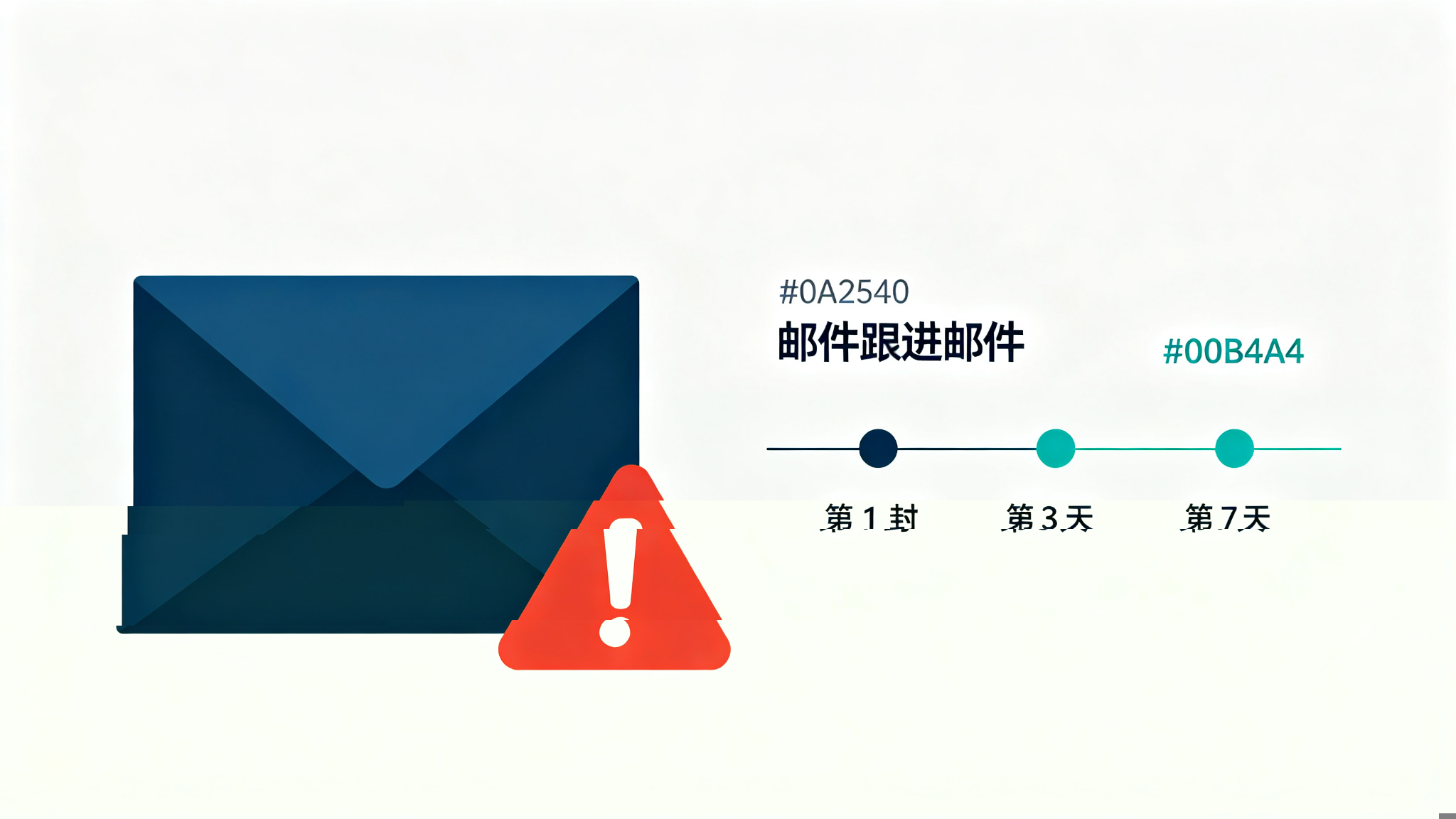
Key insight: follow-up isn’t “nagging” — it’s “continuously providing value.” Every email should give the other person a reason to keep the conversation going — materials, solutions, new information all count.
| Checklist | Description | Whether it meets standards |
|---|---|---|
| Response speed | Within 24 hours during target market business hours | ☐ |
| Targeted | Answered the specific questions in the inquiry | ☐ |
| Information density | Provided verifiable key information | ☐ |
| Next steps | Has clear guiding questions | ☐ |
| Language | Native-level, no template feel | ☐ |
Is replying within 24 hours really that important?
Important. When a customer inquires with multiple suppliers at once, the one who replies first has a natural advantage. Teams that can’t respond within 24 hours should at least set up an auto-reply acknowledging receipt and stating when a detailed response will follow.
Should the first email include a quote?
You can give a “price range,” but it’s not advisable to give a final quote directly. B2B pricing depends on specifications, volume, and lead time—it’s more professional to align on requirements first and then provide an accurate quote.
What should you do if a customer reads your message but doesn’t reply?
Don’t nag — provide value. Three days later, follow up from a different angle: supplement materials the client might need, or ask a specific question. Being left on read usually isn’t disinterest — it’s “not at the decision point yet.”
How many follow-ups before you give up?
We recommend 3–4 touchpoints within a 7-day window, then shifting to long-term nurturing (product updates, industry content). B2B decision cycles are long — a customer who doesn’t buy today may buy next quarter. Stay present, but don’t hound them.
Is inquiry quality related to follow-up?
Yes, it matters. Follow-up filters quality: after one round of serious follow-up, you can tell “real demand” from “price shoppers.” The follow-up process itself is a filter for inquiry quality.