
Technology choices ultimately need to tie back to business goals—when you need a comprehensive solution, you can refer to Brand independent website the page’s service scope, or start with Go-Global Quote Calculator Estimate a budget.
1. One-sentence positioning of the three options
| Solution | One-sentence positioning | Typical examples |
|---|---|---|
| WordPress | The most comprehensive open-source CMS ecosystem — plugins handle 90% of needs | WordPress + Theme + Plugins |
| Headless | Decoupled frontend and backend, API-driven, frontend flexibility | WordPress/Strapi + Next.js |
| Pure static | HTML generated at build time, hosting as a service | Astro, Hugo, Jekyll |
II. Comparison Across Four Dimensions
| Dimension | WordPress | Headless | Pure static |
|---|---|---|---|
| Maintenance cost | Low (visualized in the backend) | High (dual-platform development) | Low (but you’ll need to touch code) |
| SEO control | Strong (full plugin support) | Very strong (fully controllable) | Strong (naturally fast) |
| Team requirements | Low (operations staff can handle it) | High (both front-end and back-end skills required) | Medium (requires Git/build knowledge) |
| Scalability | Medium (limited by plugin ecosystem) | Extremely strong (full API freedom) | Low (limited interaction) |
| Content Updates | Edit directly in the backend | Edit in admin + redeploy | Modify the code and rebuild |
III. Recommendations for Going Global with B2B
When WordPress Is the Best Choice(Most B2B companies going global): The team has no dedicated front-end developer, so operations staff need to be able to update content themselves; the site format is “product showcase + blog + inquiry form” with no complex applications; the budget is limited, and the plugin ecosystem can cover essential needs like multilingual support, SEO, and forms.
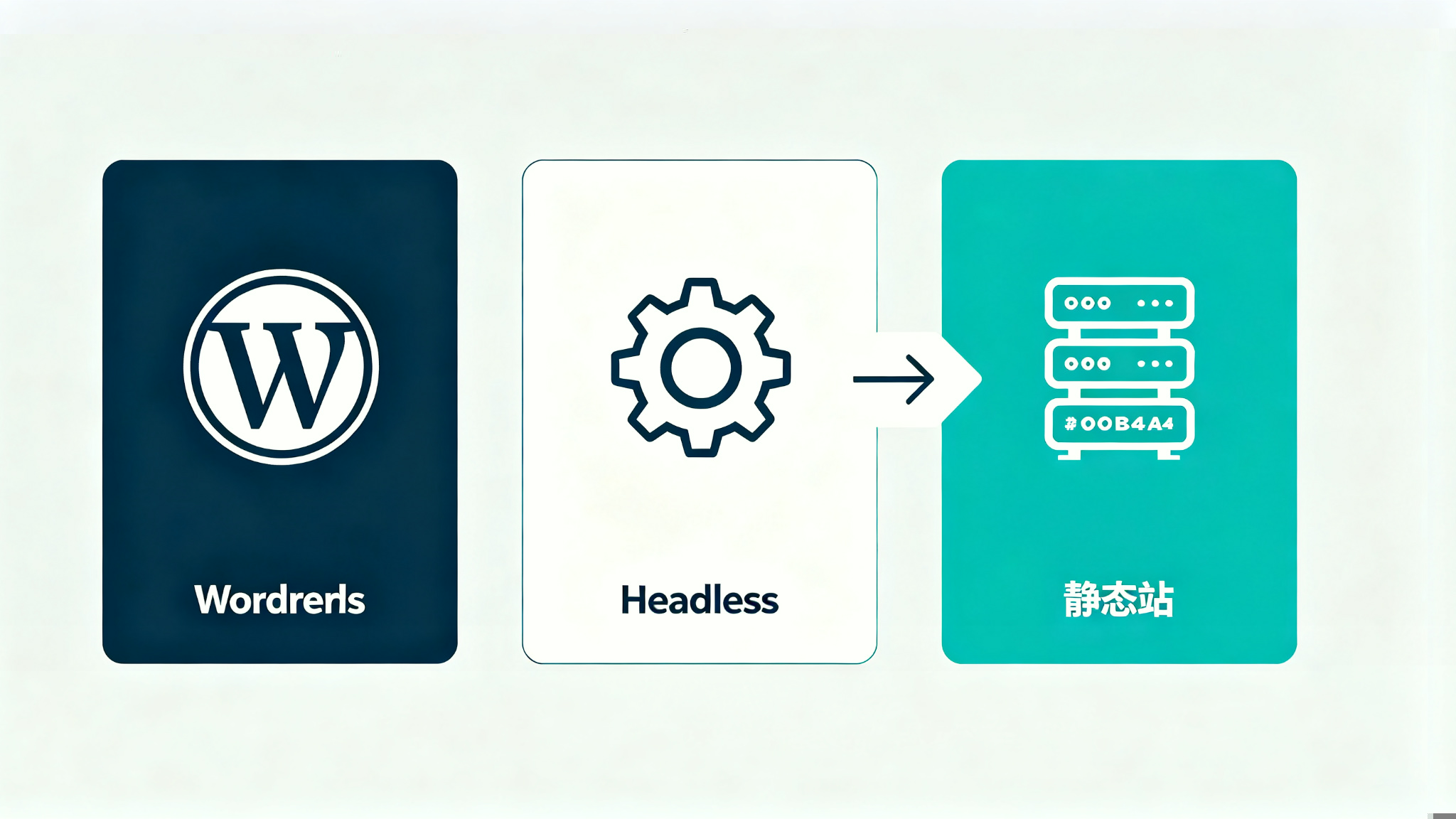
Considering the Headless scenario: You have a dedicated front-end team and want top-tier performance and interactivity; your site includes custom applications (online configurators, quoting systems, customer portals); separating content from presentation is a hard requirement.
When to choose pure static: Sites with very little content and infrequent updates (campaign pages, landing pages); extremely sensitive to speed and cost, and willing to accept that “editing content means touching code.”
4. Quick reference for solution selection
| Your situation | Recommended Plan | Not Recommended |
|---|---|---|
| No in-house frontend team; content handled by operations | WordPress | Headless |
| Need custom applications/high interactivity | Headless | Pure static |
| Purely informational, rarely updated | Pure static | WordPress (preferred) |
| High traffic, performance-heavy | Headless / Static + CDN | Unoptimized bare WordPress |
| Tight budget, fast launch | WordPress | Headless |