
There are many growth actions to take — we suggest starting with Go-Global Quote Calculator Define your budget boundaries, then return to Overseas Growth Knowledge Base Advance by stage, avoid detours.
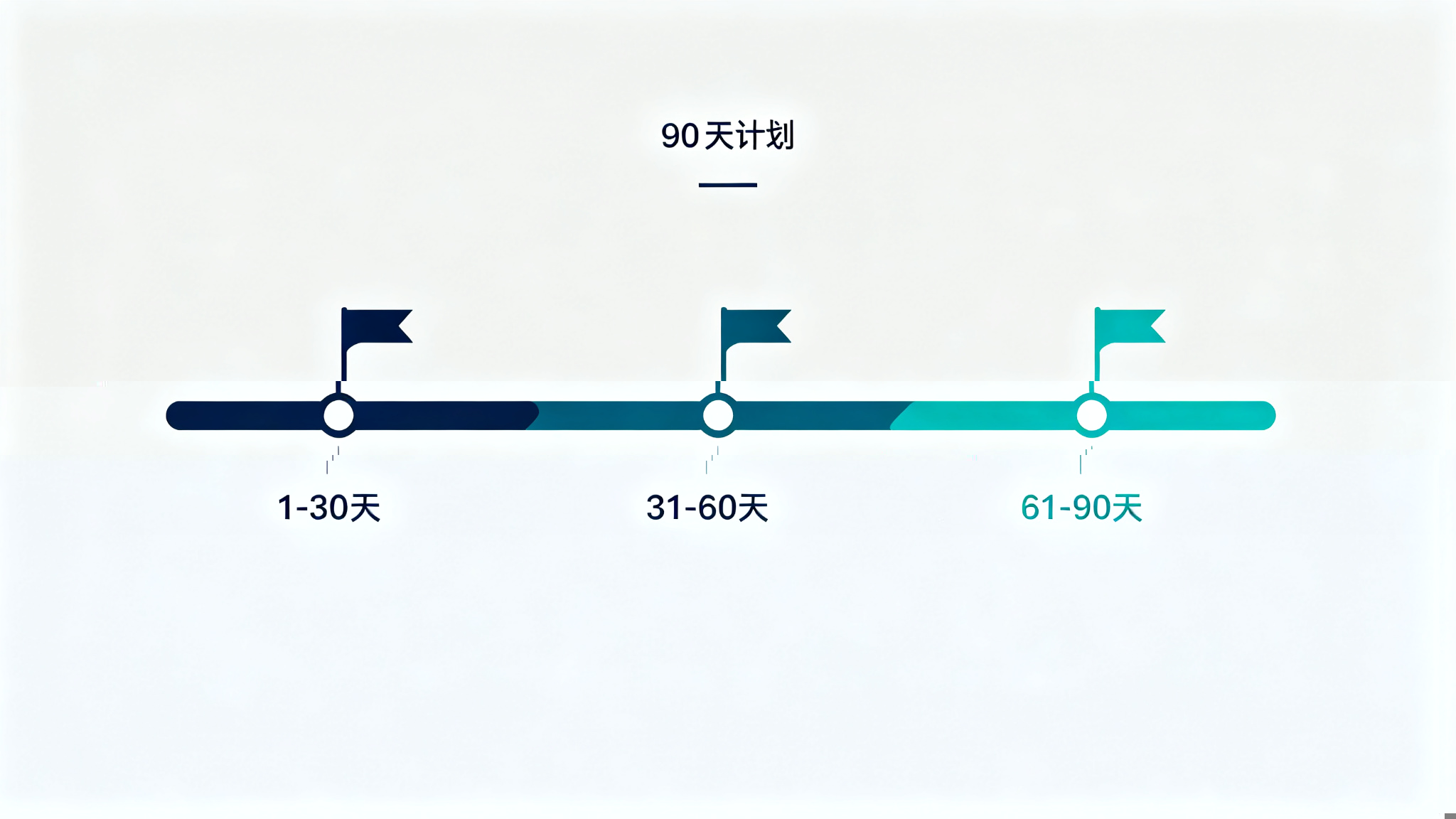
I. Overview of the three 90-day phases
| Stage | Time | Themes | Core Objectives |
|---|---|---|---|
| Phase one | 1–30 days | Technical infrastructure | The site runs, can be crawled, and can convert |
| Phase two | 31–60 days | Content and indexing | Google knows you and indexes your content |
| Phase three | 61–90 days | Growth and GEO | Traffic kickstart, AI visibility |
II. Phase One (Days 1–30): Technical Infrastructure
Goal: Don’t let technical issues hold you back. Technical: speed optimization (CDN, caching, image compression), mobile checks, Schema completion; indexing preparation: submit sitemap, configure Search Console, check robots; conversion foundation: inquiry path works end-to-end, multilingual configuration correct, security basics in place.
Acceptance Criteria: PageSpeed metrics pass, GSC receives the sitemap normally, and the conversion path has zero friction points.
III. Phase Two (Days 31–60): Content and Indexing
Goal: Get Google to recognize you and start getting content indexed. Content: produce the first batch of content by intent tier (core product pages + 10–15 long-tail articles); Internal links: link all new content to each other so every page has an entry point; Monitoring: track indexing status in GSC and fix indexing issues.
Acceptance Criteria : Core pages are indexed, the first batch of articles begins entering the index, and the indexing curve trends upward.
IV. Phase Three (Days 61–90): Growth and GEO
Goal: Traffic starts, and AI visibility establishes a baseline. Traffic: review indexing and rankings, fill content gaps, and adjust topic selection based on data; GEO: build a fixed question set, test visibility at AI entry points, and supplement entity information; Conversion: start using real data to check the inquiry funnel and fix mid-funnel drop-off.
Acceptance Criteria: Organic traffic shows a stable trend, AI entry visibility has baseline data, and inquiries begin to appear.
| Week | Stage | Key actions | Acceptance this week |
|---|---|---|---|
| 1–2 | Infrastructure | Speed / mobile / Schema | Speed test passed |
| 3–4 | Infrastructure | GSC / sitemap / inquiry funnel | Indexing preparation complete |
| 5–6 | Content | Product pages + first batch of articles | Content goes live |
| 7–8 | Content | Internal Links / Indexing Monitoring | Core pages indexed |
| 9–10 | Growth | Ranking review/content supplementation | Traffic shows a trend |
| 11–12 | Growth | GEO baseline / AI visibility | Has Baseline Data |